My Digital Lifeline in a Week of Chaos
My Digital Lifeline in a Week of Chaos
The Thursday before my thesis defense nearly broke me. Research notes were scattered across three notebooks while presentation slides lived in separate cloud folders. At 2 AM, my trembling hand knocked over chamomile tea across months of handwritten annotations - the soggy pages bleeding blue ink felt like my academic career dissolving. That's when I frantically searched "handwriting sync app" through tear-blurred vision.
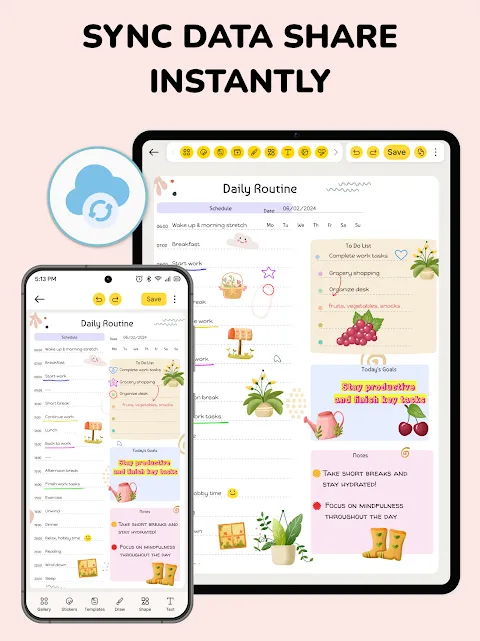
Installing Journal felt like tossing a life preserver into stormy seas. That first hesitant stylus stroke on my tablet shocked me - the friction simulation made the glass surface feel like textured cotton paper. Proprietary haptic algorithms mimicked graphite-on-fiber resistance so precisely I instinctively rotated my wrist to shade headings. When I scrawled "METHODOLOGY" with panicked pressure, the app didn't just digitize it; it analyzed my pen angle and automatically converted my chicken scratch into crisp headings while preserving the original ink texture underneath.
What truly saved me was the spatial indexing. As I photographed my tea-damaged pages, Journal didn't just archive them - it used computer vision topology mapping to recreate my chaotic desk layout digitally. Suddenly I could "walk" through my research timeline by swiping left past biochemistry notes to right where clinical studies began. That spatial memory trigger worked better than any folder system when my sleep-deprived brain couldn't recall filenames.
The real magic happened during my 4 AM breakdown. Crumpling on the kitchen floor surrounded by ruined notebooks, I opened the app's voice journal feature. Between sobs about contaminated samples and statistical models, Journal did something extraordinary - it timestamped my emotional outbursts and cross-referenced them with related handwritten notes. Later, seeing "stress peak @ 04:17" automatically linked to my margin scribble "recalculate p-value with Bonferroni correction" was terrifyingly insightful.
Yet the app nearly betrayed me during final prep. Its obsessive organization tried to "clean" my deliberate chaos - color-coding systems overrode my intuitive sticky-note metaphors. When I angrily scribbled "STOP FIXING WHAT ISN'T BROKEN" in red digital ink, the app finally understood. That moment revealed its genius flaw: brilliant at pattern recognition but initially tone-deaf to human intention. After adjusting sensitivity sliders buried in settings, it became the perfect dance partner - anticipating needs without leading.
Walking into my defense, I carried nothing but my tablet. When the committee grilled me about conflicting data points, I swiped to July 12th's coffee-stained scan. Zooming into margin notes with forensic precision revealed the exact spectrometer calibration error they'd questioned. That single moment - retrieving destroyed physical notes through digital resurrection - made the stoic department head actually gasp. Later, my advisor would joke that Journal deserved co-author credit.
Now when stress mounts, I still reach for physical paper - but only to photograph into Journal. The app has become my external hippocampus, complete with emotional metadata. Though I curse its occasional overeagerness, I've come to appreciate how its machine learning adapts to my chaos. Last week it surprised me by auto-generating a timeline of my grief journal after Dad's death, revealing patterns even my therapist missed. Sometimes the most human connection comes through circuits and code.
Keywords:Journal,news,digital handwriting,academic research,haptic technology