My Photos Learned to Flow
My Photos Learned to Flow
Rain drummed against my Brooklyn apartment window last Tuesday, trapping me with nothing but my phone and a gallery of dead memories. There it was: sunset at Lake Tahoe from two summers ago. In reality, that water had danced – liquid gold shattering into a million ripples as a kayak sliced through. But my photo? A flat, motionless mirror reflecting mountains like cardboard cutouts. I felt physical frustration crawl up my throat. That perfect moment felt murdered by my camera lens.
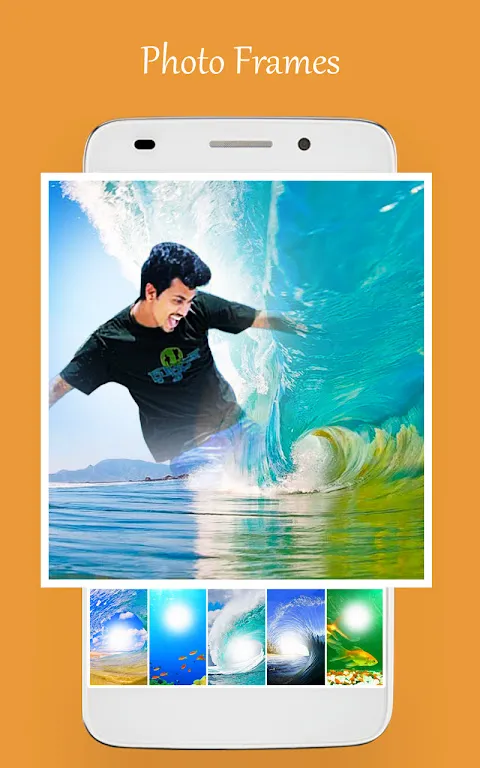
Scrolling through forgotten apps, I stabbed at one called Water Photo Editor and Frames. Skepticism evaporated when I touched "ripple mode" and dragged a finger across Tahoe’s surface. Suddenly, concentric rings exploded from my fingertip, warping the reflected peaks with hypnotic realism. The fluid dynamics simulation didn’t just animate – it calculated how waves would actually interact with the kayak’s hull, creating tiny backward curls where water met resistance. For ten minutes, I became Poseidon, stirring currents with my thumb, laughing aloud when accidental swipes generated chaotic splashes against digital rocks.
Then ambition bit. That sad little waterfall in the corner – a mere white smear in the original – deserved Niagara’s wrath. I selected "torrent" and traced the cliff edge. The processor groaned as particle-based rendering generated 3,000 individual droplets cascading down. But halfway through HD rendering, my screen froze. A primal snarl escaped me – this GPU-melting intensity clearly hadn’t considered mid-tier Androids. After rebooting, I downgraded to 720p, teeth gritted. The compromise worked: virtual water now thundered down mossy rocks, throwing up mist that caught the sunset’s pink hue. The physics engine even simulated how heavier flows created deeper channels at the base.
Final magic came with koi. I dropped three digital fish near the shore, adjusting their scales to iridescent copper. When I animated their path, light refraction algorithms made their bodies warp the underwater gravel realistically. One fish "splashed" – a calculated arc of droplets hitting the surface with perfect surface tension. Suddenly, I wasn’t just seeing Tahoe; I smelled pine needles and felt phantom spray on my cheeks. The app’s secret weapon? It didn’t layer effects – it embedded liquid into the photo’s DNA, using depth mapping to make waves crest around foreground boulders authentically.
Hours evaporated. My final image breathed: waterfall foaming, koi glinting, ripples radiating toward the horizon like living things. That night, I dreamed in liquid. When dawn came, I reopened the photo just to watch water move across pixels – a mad, beautiful illusion that resurrected joy I thought was lost. This editor demands processing sacrifices, yes. But when it flows? It doesn’t just animate photos. It resuscitates ghosts.
Keywords:Water Photo Editor and Frames,news,photo editing,fluid dynamics,memory revival