When Minecraft Met the Real World
When Minecraft Met the Real World
That Tuesday afternoon felt like wading through digital molasses. My pickaxe swung through yet another procedurally generated canyon, the sandstone cliffs bleeding into taiga biomes with the jarring seamlessness of a botched Photoshop job. After seven years of mining identical ores, even creepers had lost their jump-scare charm. My thumbs moved on muscle memory while my brain screamed for something – anything – to shatter this pixelated monotony.
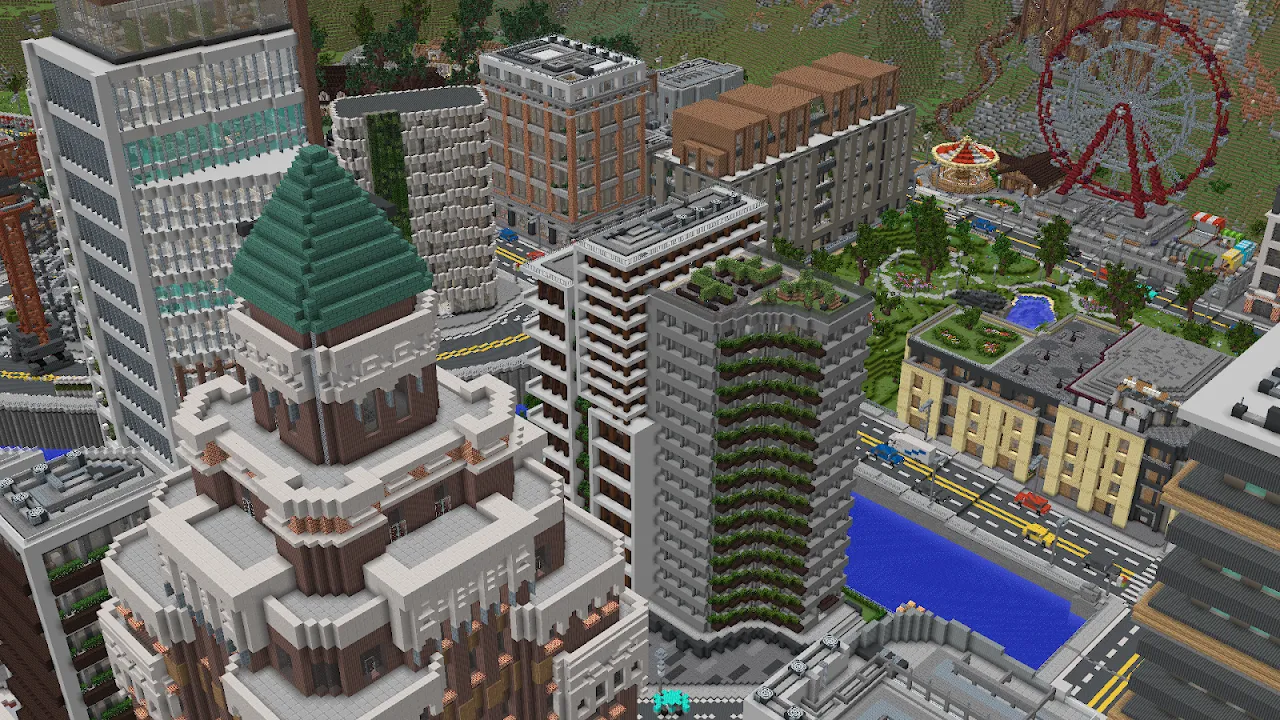
Then it happened. A misfired rocket during an End raid blasted me sideways into a village library. There, on a pixelated lectern, glowed an enchanted book titled "Cartographer's Revelation." The moment I touched it, my screen dissolved into swirling topographical lines. Suddenly I wasn't in Minecraft – I was hovering over Manhattan. The Chrysler Building pierced low-hanging clouds rendered as gray wool, Central Park's reservoir became lapis lazuli, and taxis crawled like redstone contraptions along gridlocked quartz streets. My breath hitched. This wasn't just a texture pack; it was geographical alchemy.
The download barely finished before I punched in coordinates for my childhood neighborhood. Watching the app transmute satellite data into blocks felt like witnessing dark magic. My old brick apartment materialized as terracotta, the corner bodega became an oak-and-emerald stand, even Mrs. Henderson's rose bushes bloomed as red concrete powder. But the real gut-punch came when I found the empty lot where my treehouse once stood. For twenty minutes I just stood there, virtual rain soaking my leather armor, remembering splinters and scraped knees. Who knew blocky approximations could trigger such visceral nostalgia?
Building mode unleashed terrifying power. With a swipe, I erased entire boroughs like a digital god. Replacing Times Square's chaos with floating islands connected by glowstone bridges felt blasphemous yet exhilarating. The terrain generator responded to pressure-sensitive taps – hard presses carved subway tunnels, light brushes added ivy crawling up nether brick. When I connected Brooklyn Bridge to a floating Atlantis replica, the physics engine screamed. Waterfalls poured into the void until structural supports of obsidian and crying obsidian stabilized the madness. My Switch's fan whined like a tortured cat – this app demanded blood sacrifice from hardware.
Midway through reconstructing Venice during a thunderstorm, the pathfinding demons emerged. Villagers attempting to cross my Rialto Bridge replica kept walking off edges, their idiot AI interpreting decorative chains as walkable paths. I watched in horrified fascination as a nitwit in a librarian robe plunged into the Grand Canal for the thirteenth time, bubbles rising like a pixelated suicide note. The mob-spawning algorithm clearly hadn't accounted for Venetian geography – finding drowned zombies wearing fisherman hats inside St. Mark's Basilica killed the mood faster than a creeper in a cathedral.
Memory leaks became my nemesis. After three hours of meticulous work on Tokyo's Shibuya Crossing, the app crashed. Reloading revealed my detailed ramen stalls replaced by floating minecarts and disembodied panda heads. I actually threw my controller. The subsequent rebuild taught me to worship the quicksave function like a pagan deity. Yet for all its rage-inducing flaws, seeing cherry blossom particles drift across my imperfect replica of Takeshita Street healed something in my jaded gamer soul.
What truly haunts me happened near dawn. I'd imported my actual hiking trail through the Rockies. At sunrise in-game, golden light hit the snow-capped peaks exactly as it had last summer – same angle, same blinding glare on packed ice blocks. My character's breath puffed in steamy particles while my real hands went numb clutching hot coffee. In that uncanny valley moment, the app didn't just mimic reality; it weaponized memory against my senses. I had to log off, suddenly desperate for real mountain air.
Now my worlds breathe with borrowed lives. Tokyo's neon signs glow behind my base, New Orleans' iron latticework decorates my farms, and yes – villagers still occasionally yeet themselves into Venetian canals. The app didn't just change how I play; it rewired my nostalgia circuits. Sometimes I catch myself studying real buildings, mentally deconstructing them into blocks, calculating quartz quantities for cornices. My therapist calls it "augmented reality bleed." I call it finally feeling awake inside a decade-old game.
Keywords:City Maps for Minecraft 2025,tips,procedural generation,memory optimization,geographical mapping